Crowdfunding Initiative Launched for Improving Linux Email Apr 7, 2013 - 11 hours ago Paul C
Email has been for long the Achilles heel for Linux. The open source operating system has been growing in leaps and bounds, with new distributions being released from time to time. However, it has not been able to offer the kind of email experience people have become accustomed to with Gmail, Hotmail and the likes. This may not be the case in the near future as a crowdfunding initiative has been launched to improve Linux email. The developers who created the Shotwell photo manager are driving the cause.
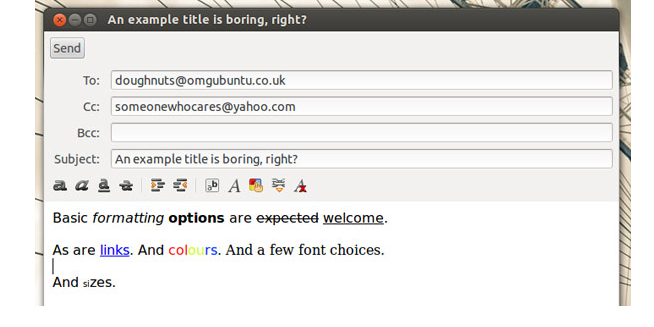
Yorba is credited for creating the photo manager for the Linux desktop environment, Shotwell. Now, they have set their sights on working towards making the email offering better. However, they don’t have the funds required to complete the task. This is why they took to Indiegogo to raise the money. According to Yorba, their target for the fundraising is $ 100,000. Within two days of the announcement, they had already raised over $ 8,000 which means the support is there for the initiative.
The email client being introduced to Linux is named Geary. Geary has been in the development phase for over two years now. Yorba believes that there are many shortcomings still to be taken care of with the email client before it can be made available for use. Linux users can check out an early version of Geary. That version runs on several of Linux’s distributions including Fedora, Ubuntu and Debian provided they are running the GNOME desktop environment.
It is not as if Linux has not been providing email services. In fact, the support the open source platform provides for different email protocols like POP and IMAP has been praised in the past. Yet, companies which have been using Microsoft Exchange don’t get the ideal business email support from Linux. Surprisingly, no one had taken up the cause to improve it until Yorba stepped up to the plate. This is good news for Linux users who want to access their email through the desktop apps provided.
Given the fact that the Linux support for Exchange has been poor overall, it is expected that Yorba would attempt to rectify the situation. But that might be some time away as the developers are more focused on improving the email client before getting to the finer details. That is not the cause for which Yorba is looking to raise money so users have to wait some time for it to come by. Same goes for calendaring which would be improved only after Geary is launched.
So far, not much is known about Geary except that it is a considerable improvement on the previous email client provided by Linux. Yorba has revealed that users would be able to integrate their Gmail, Yahoo, Outlook.com and other email accounts with Geary. It remains to be seen whether people do warm up to the new email client when it is launched. Till then, the Linux desktop users have to make do with checking their email through a web browser.
[Image via omgubuntu]
TechBeat
A Linux Mint Debian Edition (LMDE) 201303 Apr 6, 2013 - 1 day ago Paul C
The Debian Edition 201303 is one more in a long line of Linux Mint distributions being released this year. Like all previous Linux Mint distributions, this one also comes with a range of tools you can use to install Mint. From menus to installer to updater, the tools are there. The only difference is that this distribution has been built on Debian rather than Ubuntu unlike the previous releases. There are also a number of preloaded and pre configured packages in the LMDE.

There is nothing new or novel offered by this Linux Mint distribution. The only reason which comes to mind why a person might opt to use it is because it doesn’t run on Ubuntu. Even though Ubuntu remains the most popular Linux platform, there are users who don’t want to run their computers on it. So, they now have the option to use Debian if they are looking to run Linux Mint. Moreover, the LMDE is a basic distribution which isn’t that difficult to master or use for regular Linux users.
However, one shouldn’t forget that there have rapid developments when it comes to Linux distributions. Nearly every version of the OS is constantly being upgraded. That is why you might feel as though the LMDE is out of touch with the recently released distributions. The most obvious thing to note is the kernel on which it is built. The LMDE uses the Linux kernel 3.2.0 when 3.7.x and 3.8.x are the ones being used for the recent distributions that have been released.
This may cause compatibility issues and make it a little difficult for you to install the distribution. First of all, you need to find out whether your computer can run LMDE. Yet, this is all a matter of routine for a regular Debian user. This version of Linux is notorious for being the most difficult to use in terms of installing and checking compatibility. So, for Debian users, it is business as usual. It is the non-Debian users who will consider this a major hindrance.
There is nothing special about the Linux Mint Debian Edition (LMDE). It is highly unlikely that the distribution is going to attract much interest from anyone other than Linux devotees and ardent Debian users. Even the most optimistic of developers wouldn’t be expecting this distribution to convince users to alter their preferences and think about trying something new for a change.
[Image via fwallpapers]
TechBeat
Hydrogen From Any Plant? Researchers Crack The Code Apr 6, 2013 - 6 hours ago James
A team of Researchers at Virginia Tech have created a process to extract large amounts of hydrogen from everyday plants.
The new discovery could be a boom for the hydrogen industry as researchers search for new and renewable sources of energy.
Y.H. Percival Zhang and his team pulled the hydrogen from the plants through the use of xylose, the second most prevalent sugar in plants. According to Zhang:
“Our new process could help end our dependence on fossil fuels.â€

Hydrogen energy is still in its infancy in terms of everyday use because of logistical challenges that have made its low-cost expansion difficult.
Because Xylose is found in every plant on the planet researchers have essentially found a way to locate and extract hydrogen all around us.
In the past hydrogen was obtained by taking natural gas and reforming it into the new form of energy. The old process in many ways was seen as wasteful and overly complex. The old process also sacrificed  valuable resources which would no longer be lost with help from the new process.
While the new process is a move in the right direction, the group notes that research is still in its preliminary stages. The group estimates that it will take at least three years before the procedure for extracting hydrogen from xylose is ready for mass production.
Even with a methodology in place for extracting hydrogen, creating the storage and distribution models for the safe use of the product, especially in automobiles and other volatile areas, is likely still years if not decades away.
If the groups practice of extracting hydrogen from any plant gains widespread approval it could be a challenge to other more environmentally damaging energy sources such as natural gas which relies on fracking and other potentially dangerous extraction methods.
[Image via Engadget]
TechBeat
Luvocracy: The Pinterest-like site for Shopaholics Similar to Pinterest in layout and design, Luvocracy is a new San Francisco-based social network that launched into beta last fall.
On Pinterest, users can pin any kind of inspirational content that interests them, such as clothing, recipes, vacations spots, and diy project, to share with friends and other pinners. Luvocracy also allows its users to collect content to share on social sites, however the content of the startup site is limited to products that are currently for sale, aiming its focus towards shopping instead of random photos and how-to tutorials.

Luvocracy was built on the concept that consumers are more likely to buy products that are recommended to them by friends. This is more than just a theory according to Nielsen’s ‘Global Trust in Advertising Survey’, which found that 92% of consumers consider word of mouth the most trustworthy form of advertising.
How Luvocracy Works
The clutter free site allows users to collect all manner of looks and products that are for sale, and to tack them to categorized boards. Consumers can also repin products posted by friends, brands, and designers. Posting products from any retailer is made easy with the downloadable Luvocracy plug-in.
The creative director of Luvocracy, Christine Martinez, explained the workings of the innovative new shopping platform to Mashable, saying, “We wanted to build a platform where you could see products recommended from everyone you trust in one place, so you can sift through it like a personalized catalog. You can showcase what you discover too or put it in your ‘backroom,’ which is only visible to you.â€
User Rewards
The most interesting aspect of Luvocracy is that the company also gives consumers an incentive to use the site by offering a small commission on sales generated by their posted product recommendations. For example, if you post a recommendation for a new product at Macy’s and one of your followers buy that product, you will be rewarded with either a mailed check or a credit toward future on-site purchases. This could become a great motivator for shoppers to post a number of quality recommendations, and the more followers you have, the more likely you are to reap rewards.
Request an Invite and Start Shopping
Although the site is still in beta, you can request an invite by going to http://www.luvocracy.com/ and joining the “recommended lifeâ€. While Luvocracy has yet to announce how many users have joined the site so far, the company claims that the list of memberships is indeed growing.
Though there are similarities between Pinterest and Luvocracy, it’s unlikely that the two sites will be competitors. More likely is the possibility that Pinterest will be where you go when you want to be inspired, and Luvocracy will be the site to visit when you want to shop. Could this innovative advertising concept become a common and fun way to do business in the near future?
[Image via dreamsandjeans]
TechBeat
Sherpa App: Your Personal Assistant Everyone dreams of having a personal assistant. You know, preferable someone like Pepper Potts who will do everything for you, even taking out the trash occasionally. Of course, for average people like you and me, a personal Pepper Potts is probably going to stay a dream forever. But there are brilliant minds who create their own startups to try to create personal assistant apps that will have to suffice.

Enter Sherpa
This personal assistant app, which holds so much potential that it recently received a nice sum of $ 1.1 million as seed funding from the likes of Andreessen Horowitz, Google Ventures, and InterWest Partners. At first glance, Sherpa reminds one of Google Now.
What does Sherpa do?
To fullfil its function as a personal assistant, Sherpa takes a look at the location data of the user. From this, it predicts alerts and information even before the user asks for it. A perfect situational example is when you’re on the road. Instead of having to check Waze for the traffic situation, you will only need Sherpa. The app will tell you how the traffic is and even suggest alternate routes if necessary. It can do similar things regarding weather, shops, ticket counters, flights, and so on.
It goes deeper than that. The idea of Sherpa is to tap into the veritable treasure trove of information that is already stored in your phone. For example, you only have to enter a location and appointment/activity once in your calendar, and Sherpa can use that information to give you a reminder or suggestions related to the area or activity.
How can it make you forget about Google Now?
Sherpa is currently in beta, so it may not be as strong â€" yet. The distinguishing factor, though, is that the creators of Sherpa aim to “predictive intelligence through location“, more than Google Now, which focuses more on ambient search. If things go as planned, Sherpa will indeed be a go-to app for all reminders, suggestions, and other relevant content connected to real life.
Want to give it a try? Visit Sherpa, and request for a code. I’m still waiting on mine, but I am really looking forward to trying it out. Especially since Google Now is off limits to iOS.
[Image via Forbes]
TechBeat
Personal Assistant Sherpa App Might Make You Forget Google Now Everyone dreams of having a personal assistant. You know, preferable someone like Pepper Potts who will do everything for you, even taking out the trash occasionally. Of course, for average people like you and me, a personal Pepper Potts is probably going to stay a dream forever. But there are brilliant minds who create their own startups to try to create personal assistant apps that will have to suffice.
Enter Sherpa
This personal assistant app, which holds so much potential that it recently received a nice sum of $ 1.1 million as seed funding from the likes of Andreessen Horowitz, Google Ventures, and InterWest Partners. At first glance, Sherpa reminds one of Google Now.
What does Sherpa do?
To fullfil its function as a personal assistant, Sherpa takes a look at the location data of the user. From this, it predicts alerts and information even before the user asks for it. A perfect situational example is when you’re on the road. Instead of having to check Waze for the traffic situation, you will only need Sherpa. The app will tell you how the traffic is and even suggest alternate routes if necessary. It can do similar things regarding weather, shops, ticket counters, flights, and so on.
It goes deeper than that. The idea of Sherpa is to tap into the veritable treasure trove of information that is already stored in your phone. For example, you only have to enter a location and appointment/activity once in your calendar, and Sherpa can use that information to give you a reminder or suggestions related to the area or activity.
How can it make you forget about Google Now?
Sherpa is currently in beta, so it may not be as strong â€" yet. The distinguishing factor, though, is that the creators of Sherpa aim to “predictive intelligence through location“, more than Google Now, which focuses more on ambient search. If things go as planned, Sherpa will indeed be a go-to app for all reminders, suggestions, and other relevant content connected to real life.
Want to give it a try? Visit Sherpa, and request for a code. I’m still waiting on mine, but I am really looking forward to trying it out. Especially since Google Now is off limits to iOS.
[Image via Forbes]
TechBeat
Why Did Apple Buy WiFiSLAM? Apple is always on the news, but there are some tidbits that are worth more than others. Take for example the acquisition the company made late in March. Little known indoor GPS company WiFiSLAM suddenly made the headlines, thanks to Apple turning its eye on it. That also means sending cash its way, of course. Naturally, tech enthusiasts jumped on the news, with armchair pundits giving their two cents left and right.

But what is WiFiSLAM, really?
I love the name, but it does not really tell me what the company does. Aside from the term “indoor GPS†being dropped all over the place, a perfunctory look won’t give you anything. Here’s what WiFiSLAM does, straight from the horse’s mouth.
Allow your smartphone to pinpoint its location (and the location of your friends) in real-time to 2.5m accuracy using only ambient WiFi signals that are already present in buildings.
We are building the next generation of location-based mobile apps that, for the first time, engage with users at the scale that personal interaction actually takes place. Applications range from step-by-step indoor navigation, to product-level retail customer engagement, to proximity-based social networking.
Here’s more.
So basically, WiFiSLAM makes use of a combination of technologies to make indoor mapping more accurate.
Now that makes a lot of sense…
Perhaps not the exact technology, but the acquisition by Apple. The fail that is the Apple Maps launch is a dead horse, something which should not be beaten at this point. But I am sure that still stings, and we already know how Google Maps has gone way ahead. With WiFiSLAM, Apple Maps might be able to have a fighting chance. I still use Google Maps, but I won’t mind using Apple Maps if they come up with a product at par â€" or better â€" than what the competitor has; and yes, that includes indoor maps.
P.S. By the way, one only has to read a little bit to find out that SLAM stands for Simultaneous Localization and Mapping. 
[Image via nowtheendbegins]
TechBeat
New Perks for Tech Workers Big tech companies are working harder to attract and retain workers. More than ever, technology allows for a mobile workforce. However, the largest purveyors of technology are increasingly expanding their headquarters and adding more and more perks for employees. Some experts in the field see this as an effort to compete for talent. It also appears to be a means by which tech companies can entice their workers to remain at work as much as humanly possible.

New headquarters and expansions are taking place at the majority of the major firms of Silicon Valley. This includes such companies as Facebook, Google, Apple, Microsoft, LinkedIn, Intel, eBay, Netflix, Nvidia and Oracle. Many tech companies say that it is necessary to offer a spectacular work environment in order to retain top talent, as well as to foster innovation and creativity.  The perks offered by these companies extend beyond the standard fare offered by most work environments.
At 176 acres, Apple’s new campus will be one of the world’s largest workplaces. The interior offers ping pong tables, Lego stations, and gaming arcades. They also offer free haircuts. Facebook’s new campus includes a B-B-Q shack, sushi house and bike shop. Facebook currently offers employees outdoor movies, a taqueria, and an artist in residence. Additionally, employees have access to Ben Barry’s Analog Research Laboratory, which provides laser cutters, woodworking tools, silk-screening supplies and a letter press machine.
Another famously employee friendly tech company, Google offers its share of quirky perks. Google employees can play pool, have a beer, and even bring their dogs to work. If they get tired, they can take a nap in a nap pod. The office also has a climbing wall, bowling alley, gyms, cafes, and laundry facilities. There is a community garden that allows employees to get their hands dirty planting seeds, as well as access to classes on a wide variety of subjects. They also offer childcare, as well as a host of other traditional benefits.

Lady Gaga visiting Google as part of the Musicians@Google program. Just one of Google’s ‘out of the box’ perks.
Can you imagine working somewhere that has some of these perks? Or maybe you have your own ideas of what you would enjoy at your workplace.
[Images via mashable & evolver]
TechBeat
Parents Use Apps to Monitor Children’s Smartphone Use Apr 3, 2013 - 9 hours ago Julia
With the prevalence of smartphone usage increasing for children, it is becoming increasingly difficult for parents to monitor their children’s internet usage. For many smartphone users, their phone is their primary way of accessing the internet. This goes for children with smartphones as well. Also, smartphone and tablet users are increasingly younger. The fact that young children can carry a computer in their pocket can make it difficult for many parents to supervise their online activities. Fortunately, there is an app for that.

In fact, parents can choose from several different apps on the market. If you want to monitor the sites and apps your children use, as well as what texts and calls they can receive, then Kytephone can help. Kytephone gives parents the ability to block calls, monitor and control internet usage, as well as control all of the apps on your child’s phone. Or if you prefer to provide your children with more freedom, Kytephone also has a version for older teens that doesn’t include the ability to block calls.
For those with younger children, there is the free app Playrific. The app is available for Android, iPad and also on the Web. This app is specifically recommended for 2 to 8 year olds, and provides users with a locked browser that offers only kid-friendly content, such as books, games and educational videos. It also curates content based on the child’s interests, so that the experience is tailored specifically for the child.
With the unlimited access to social networks that a smartphone or tablet provides, comes another set of worries for parents. Many parents feel it is important to monitor social networks for problems like bullying, sexual predators, or even identity theft. Net Nanny Social is a subscription, Web-based tool. The cost of the subscription is $ 19.99 for a year of service. The subscription helps parents to monitor social networks including Facebook and Twitter.
[Image via technews24h]
TechBeat
Ubuntu Finds A Way Into China Apr 3, 2013 - 3 hours ago Paul C
After being a largely Microsoft-dominated market, China has finally made a move to unfetter itself from Microsoft’s chains by opting to sign a deal with Canonical, the makers of Ubuntu. The event was widely reported, and it was speculated that China chose to go with this decision in favor of more home-grown IT alternatives rather than looking to the West. The decision was largely based around the fact that it strengthened and upheld the Chinese Government’s propaganda of introducing an open source software ecosystem in China.

Working in close collaboration with the Chinese government, Canonical is busy developing an operating system which will be based on Ubuntu, and will be renamed as Ubuntu Kylin. Marketed as the ‘Chinese version of Ubuntu’, the software is set to be released to the masses in April 2013, in conjunction with the regular release cycle followed for all Ubuntu products.
Canonical has also received a lot of support from other software development organizations and the development of the Ubuntu Kylin has been a joint venture of the CSIP (China Software Integrated Chip Promotions Centre), Canonical and the NUDT (National University of Defense Technology). So far, it can be seen that Canonical has received huge support and good will from the Chinese Government. The three organizations have collaborated extensively to formulate the CCN Open Source Innovation Joint Lab, located in Beijing, which hosts programmers and engineers from each of the collaborating organizations.
The software of Ubuntu Kylin is said to go above and beyond other desktop and cloud software in catering to the Chinese market by utilizing functions that can support Chinese input. Other Chinese data which is supported includes a Chinese weather indicator, a Chinese calendar and allowing users to search for popular Chinese music and other services from the Dash. Though these features are largely small and may add nothing new, the concept of having a China focused software is rather new.
Future features which have been predicted for the Ubuntu include the addition of the ability to integrate functions and features which enable access to Baidu Maps, shopping services from Taobao, ability to process payments and other procedures with Chinese banks and access to information regarding real time train and flight information. Not satisfied with just that, Ubuntu Kylin programmers are teaming up with WPS in order to develop a system management and photo editing tool that can hopefully also be incorporated with other versions of Ubuntu.
However, a large amount of speculation is going on with regards to the effect this move will have on Microsoft’s hold on the market. China has a software market which was largely dominated at a rate of 91.62 percent by Microsoft, with only 7.17 percent belonging to the OS X and a pitiful 1.21 percent belonging to Linux. It should be interesting to see how the Chinese market receives the new software and how strongly Linux will dominate the market. Luckily, there is an optimistic view about the market’s general reception of the Ubuntu Kylin software.
[Image via omgubuntu]
TechBeat
Will Apple Conquer The Indian Market? Apr 3, 2013 - 1 min ago Noemi
Apple has enjoyed god-like status in many countries, not in the least thanks to its fan boys and girls. Fanaticism or not, one cannot simply ignore the allure that Apple products have. From iPhones to iPads to Macs to MacBooks, Apple has continued to churn out devices that do the job and look awesome. Of course, haters will be haters and there will always be those who have nothing good to say about the brand.
It is hard to argue when it comes to stats and hard numbers, though. And those are what matter when Apple enters markets. India is one of the biggest markets for electronics, and Apple has not overlooked that. As such, they entered the country not too long ago. Admittedly, they had a rather slow start, but things might have just made a turn for the better for Apple in the Indian market.

Apple’s strategy? To go to the mom-and-pop stores that are scattered all throughout the country. India is a tech-loving nation, both as consumers and manufacturers. They have a huge population, and they are considered the world’s fastest growing smartphone population. Bearing that in mind, Apple has done well to make a push.
While it still ranks second â€" to no less than Samsung â€" it does seem that Apple’s strategy is working. Currently, Apple has dedicated franchisees in the country. In order to be competitive and perhaps play catch up with Samsung, Apple needs to adapt to the specific way things are done in India â€" that is, forget about telecom-subsidized handsets.
According to The Economic Times, Apple is ramping up its sales strategy. It has reportedly asked its franchisees to “scale up their operationsâ€. The plan also involves tripling exclusive stores in the country by 2015, to about a total of 200. Add that to bringing products to family-owned businesses, and Apple might just have a go at dominating the Indian market.
The question is whether or not the Indian market will have the disposable income to devour Apple devices as they come out, which is rather often these days.
So, will Apple conquer the Indian market? Perhaps.
[Image via benzinga]
TechBeat
Samsung Patents Reveal Future Features The patent wars. Yes, it is just as real as the browser wars, and all other tech wars out there. It is nothing new either, with mobile companies suing each other left and right in past few years. It even reached a point when we needed a graphical representation of companies suing each other, as we couldn’t keep track of things any more!

According to mobile analyst Chetan Sharma, though, the future is looking bright for Samsung. At least in terms of patents received. We know just how dynamic the mobile market is, and it is imperative for companies to make sure that they hold the intellectual property rights to potential money-making technology. If they want to survive, that is.
And when it comes to hoarding patents and keeping them sacred (so the competition can’t pull one on them), Apple and Samsung are at the forefront of the battle. Sharma took a look at the patent world in the United States and Europe, and found out that Samsung has gained an advantage over its main competitor. According to his report, there were more than 7 million mobile patents awarded in those areas in 2012. That’s a whole lot of patents, but they didn’t all go to Apple and Samsung, obviously. Brands such as Sony, Microsoft, RIM, LG, Qualcomm, Ericsson, Panasonic, Alcatel-Lucent, and Nokia are still active in this regard, although to a lesser degree.
Among some of the patents are gentle hints at the features and new UI’s we’ll likely see with the Samsung Galaxy SV and other key new phones. For example-the patent below shows how Samsung intends to visualise folder management for future phones.

When applications are grouped in a folder they appear stacked on the main app screen. Folders can then be opened by tapping on the folder or by pinching the folder to open a pop out screen with the folder contents. Within the folder you can then scroll vertically. The focus on this and some of the other recent patents seems to be multitasking. An area BlackBerry have marketed heavily with the new BlackBerry Z10.
What does this mean for the future? For consumers, this might just mean that we will be seeing better products from Samsung in the future. Having gained mobile patents for God-knows-what, and considering its constant struggles with Apple, Samsung will probably go all out to attract mobile gadget enthusiasts to their corner. Seeing quite a handful of people switching from Apple to Samsung phones in my circle, I can’t help but be curious. Still, I don’t believe that that Apple will lag far behind, patents or not. After all, it still has one of the most brilliant designers alive.
[Images via pattifridayphotography & andromeno]
TechBeat


